10Meter band repeaters
Active in various parts of the world are some repeaters operating in FM in the upper portion of the 10‑Meter band. The IARU band plan provides, on the 29 MHz frequencies, the possibility of using amplitude modulation and frequency modulation, as well as repeater stations, which under favorable propagation conditions allow intercontinental contacts between radio amateurs.
The use of these foreign repeaters is limited to days of strong propagation on the higher bands, particularly during daytime hours in the spring and autumn seasons, in fair weather conditions.
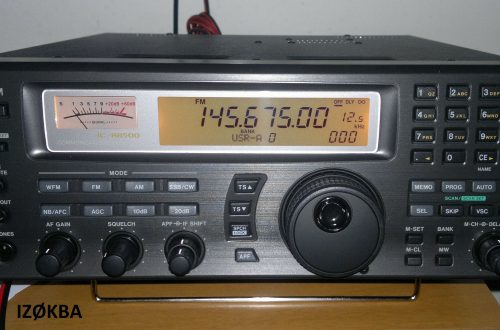
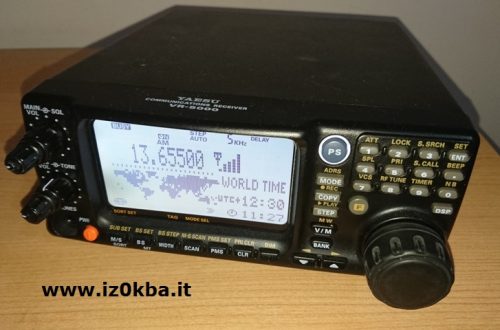
It is possible to receive these repeater stations even with portable scanner devices, provided one is outdoors. Access can be achieved with at least 20 Watts on an omnidirectional antenna. The frequency shift is −100 kHz, so the input frequency on which one must transmit is 100 kHz below the reception frequency.
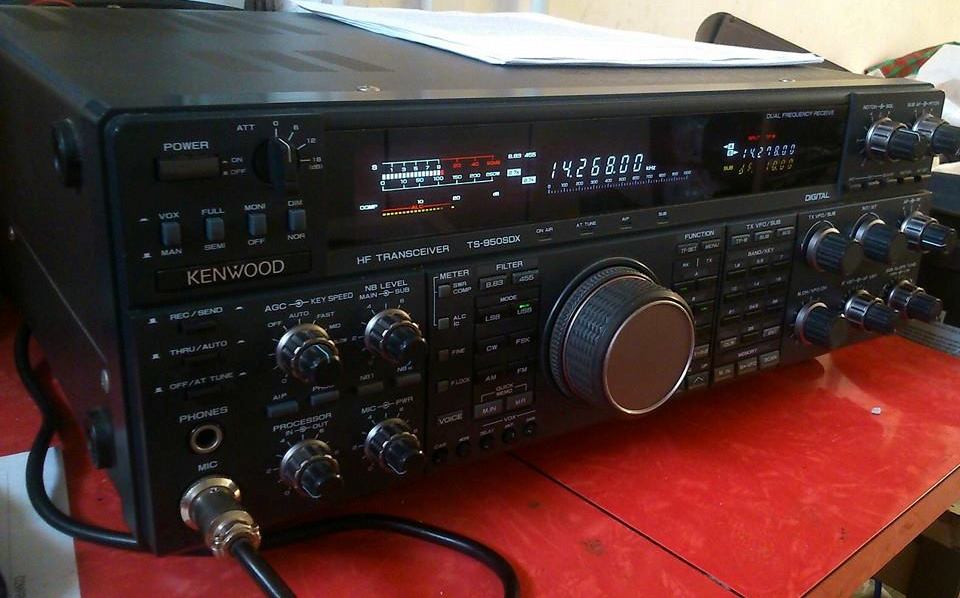
Attention: some repeaters may require a sub‑audio tone to enable access, a feature now included in more modern radios such as the Icom IC‑7300, Yaesu FT710, and FT‑DX10. On older equipment, if a sub‑tone is needed for access, it will be necessary to build a board that generates the tone; various projects are available on the web and in older specialized magazines.
Here is a list of the repeaters most easily receivable and accessible from Italy, which I personally had the opportunity to receive in 2022.
| Frequenza di uscita | Nominativo | Città | WW Locator | Note |
| 29620kHz | KQ2R | New York (USA) | FN22ug | Campanello a fine trasmissione annuncio telegrafico, lunga coda |
| 29.630kHz | link | M. Bisbino (Como – Italia) | JN45MU | Sub-tono 88.5Hz |
| 29650kHz | HB9HD | Fronalpstock (Alpi svizzere) | JN46hx | Sub-tono 71.9Hz |
| 29.660kHz | unid | varie | ||
| 29670kHz | RR3AAC | Mosca (Russia) | KO85us | Intro musicale (segnale intervallo Radio Mosca), annuncio in inglese |
| 29680kHz | SR7TL | Polnocna (Polonia) | KO02mg |
Exploring the 29 MHz Band
Although the 29 MHz band is officially part of the amateur radio spectrum, it remains largely overlooked by many operators. Listening to QSOs and browsing forums or Facebook groups, it becomes clear that this portion of the spectrum is often forgotten—or even unknown—because reliable contacts depend on favorable propagation. Some radio amateurs even assume the band ends at 28.999 MHz.
Yet, the 29 MHz range offers unique opportunities. According to the IARU Region 1 band plan, and confirmed by practical listening experience, the frequencies are divided into distinct segments:
- 29.000 – 29.100 MHz: AM simplex QSOs
- 29.100 – 29.400 MHz: FM simplex QSOs
- 29.300 – 29.510 MHz: Satellite links
- 29.510 – 29.590 MHz: FM repeater inputs (RH1 – RH8)
- 29.600 MHz: FM calling frequency, before moving to simplex channels
- 29.610 – 29.700 MHz: FM repeater outputs (RH1 – RH8)
This structure highlights the versatility of the band: from traditional AM contacts to FM repeaters and even satellite communications. With the right propagation conditions, 29 MHz can open the door to exciting long-distance connections that many operators overlook.
Reference Sites and Sources
The information provided here such as locator data and the location of each listed repeater installation has been taken directly from the respective official websites. The various links are associated with each callsign.